
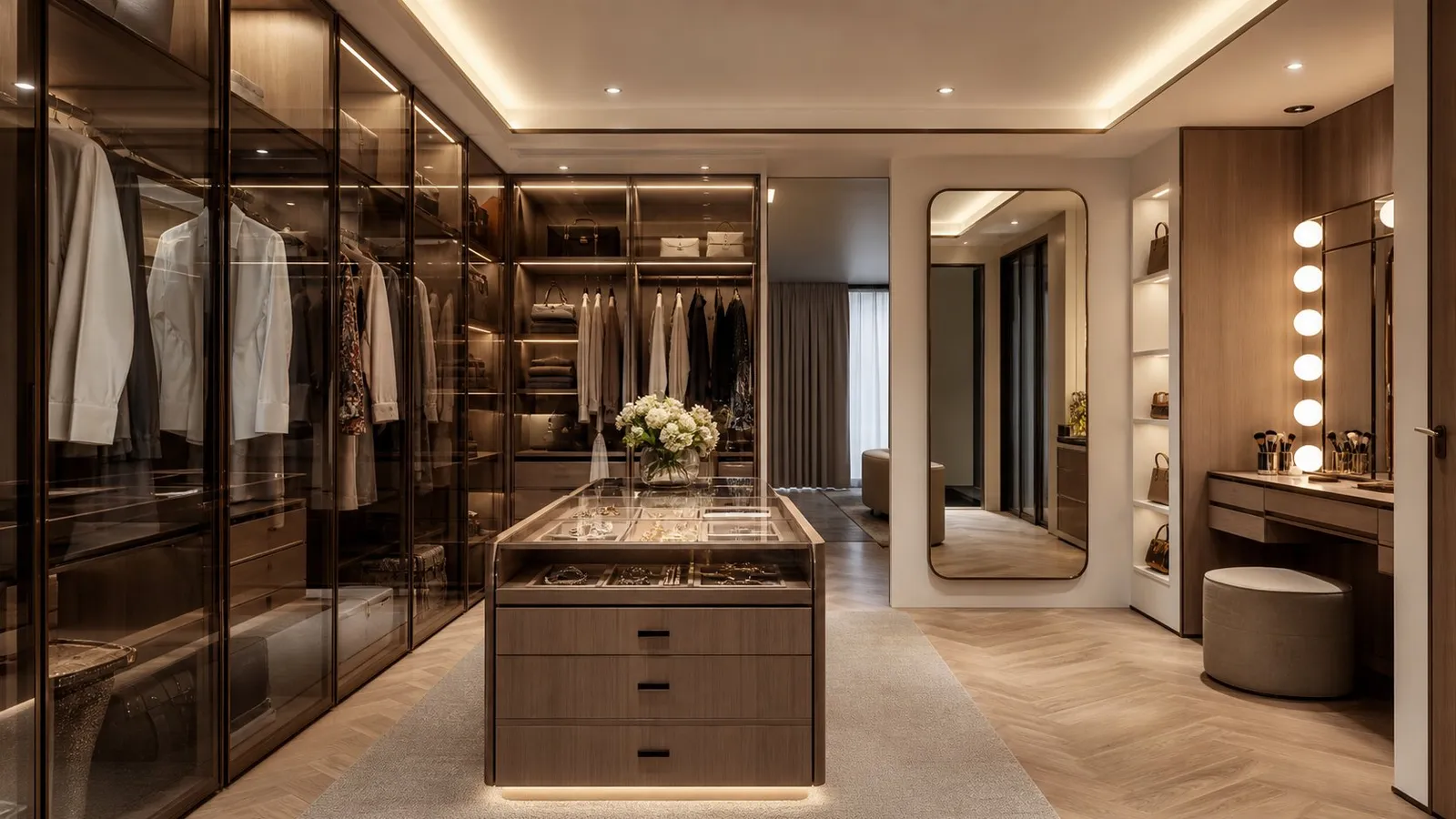
Joinery
Built-in Wardrobe or Walk-in Dressing Room: Which Is Right?
Both store clothes. The right choice depends on room size, how much you own and how you like to get ready.
The short comparison
The wardrobe vs dressing room decision comes down to space and habit.
| Factor | Built-in wardrobe | Walk-in dressing room |
|---|---|---|
| Space needed | One wall | A separate room or large zone |
| Storage | Good, efficient | More, with display |
| Dust | Closed doors keep dust out | Needs doors or glass fronts |
| Getting ready | In the bedroom | Private dressing space |
| Best for | Most bedrooms | Master suites, large wardrobes |
When a wardrobe is the better choice
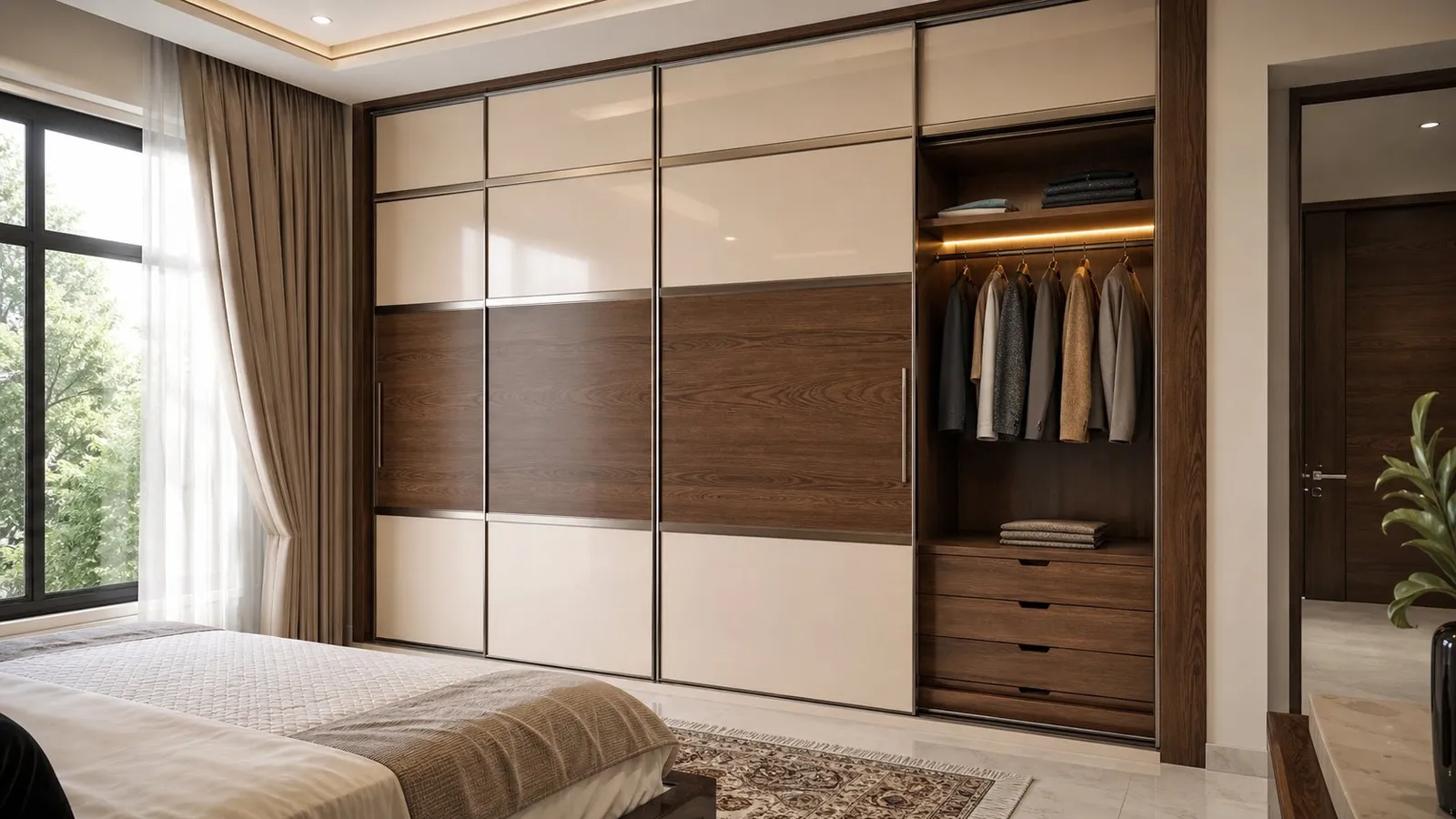
In most bedrooms, a well-planned built-in wardrobe gives more usable storage per square foot than a walk-in, because there is no walkway. It suits compact rooms, children's rooms and guest rooms. Sliding doors save space; hinged doors give full access. See wardrobe design.
When a dressing room is worth it
A dressing room makes sense when you have a large wardrobe, share the room with a partner on different schedules, or want a private space to dress. It works best between the bedroom and bathroom. Plan for daylight or very good artificial light, ventilation, and doors or glass fronts against Lahore dust. See dressing room design.
Planning the interior
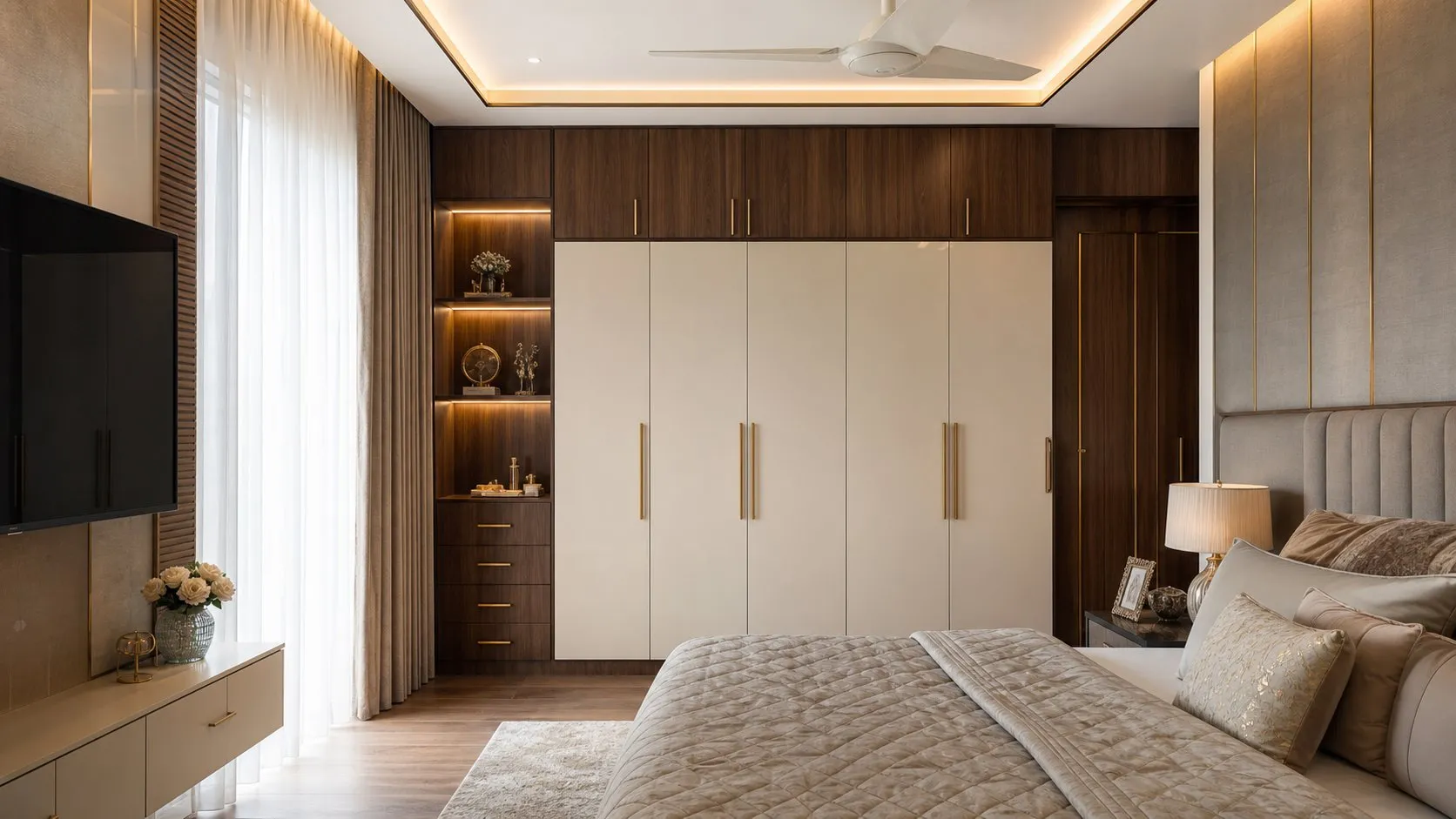
- Count long hanging, short hanging and folded items.
- Plan shoe storage by number of pairs.
- Add drawers for small items and jewellery.
- Include lofts for luggage and seasonal clothes.
- Light the interior with LED strips or sensor lights.
The interior layout matters more than the door finish in both options.
Space you need for each
| Option | Minimum practical space | Best for |
|---|---|---|
| Built-in wardrobe | About 60 cm depth plus door swing or sliding clearance | Most bedrooms |
| Walk-in wardrobe | A strip at least 1.2 m wide with storage on one side | Larger master bedrooms |
| Full dressing room | A separate room or alcove with storage on two or three sides | Master suites in kanal houses |
If the space is tight, a well-planned built-in wardrobe almost always beats a cramped dressing room.
Inside matters more than outside
Whichever you choose, the internal layout decides how useful it is. Plan hanging space for long and short clothes, drawers for folded items, shoe storage, and a high shelf for suitcases.
- Lighting inside the wardrobe, switched by the door.
- A full-length mirror on a door or wall.
- Pull-out trays for accessories and jewellery.
- Ventilation, especially in rooms against an external wall.
Making the decision
Consider how you dress, how much you own and how the bedroom will be used in ten years. See our wardrobe design and dressing room design services.
How to prepare for your first design meeting
A clear brief saves time and leads to better design. Before you meet a designer, gather a few simple things.
- Plans or drawings of the space, or a rough sketch with measurements.
- Photos of the space as it is today.
- Five to ten images of interiors you like, and a few you dislike.
- A list of must-haves and nice-to-haves.
- A realistic budget range and the date you need the space ready.
With this in hand, the first meeting moves straight to ideas instead of basic questions. You can book a site visit or studio meeting online.
Hybrid options
If space is tight, a dressing zone can be created with a run of wardrobes along a short corridor between bedroom and bathroom, or a U-shaped wardrobe area screened from the bed. These give a walk-in feel without a separate room.
The short version.
- Wardrobes store more per square foot.
- Dressing rooms suit large wardrobes and shared suites.
- Interior planning matters most in both.
Questions
Asked often, answered plainly.
Not always. It needs more space; a built-in wardrobe is more efficient in most bedrooms.
Use doors or glass fronts on hanging areas and plan good sealing and ventilation.
A compact corridor or L-shaped wardrobe zone can give a dressing feel without a separate room.
Dressing rooms usually do, because they involve more joinery, lighting and space. A quote depends on size and finishes.
Store for the life you have, not the showroom you saw.
Keep looking
Related reading.
Wardrobe Design Cost in Pakistan 2026: Shutters, Boards and Fittings
Boards, shutters, sliding or hinged, and the fittings inside: what sets a wardrobe budget.
Read the article
Small rooms that live large
Small space interior ideas for compact homes: storage walls, clear sightlines, light and multipurpose zones th
Read the article
1 Kanal House Interior Cost in Lahore 2026: Room-by-Room Budget
Where a 1 kanal interior budget goes, room by room, and how to phase it without regret.
Read the article