
Renovation planning
How Long Does a Full House Renovation Take?
Owners want a date. The honest answer depends on the phases your project needs and the decisions you make on time. Here is how a renovation schedule really works.
Why there is no single answer
When people ask how long does house renovation take in Pakistan, the real answer is: as long as its phases and decisions take. A paint refresh and a full renovation with new services and layouts are completely different schedules. What we can share is the order of work and what speeds it up or slows it down.
The phases of a full renovation
| Phase | What happens | Depends on |
|---|---|---|
| 1. Survey and design | Measurements, layouts, 3D, drawings | Speed of your approvals |
| 2. Quotation and procurement | Pricing, ordering long-lead items | Imported materials |
| 3. Demolition | Stripping finishes and old services | What is found behind walls |
| 4. Services | Electrical, plumbing, AC routing | Scope and inspections |
| 5. Civil and ceilings | Plaster, screed, false ceilings | Curing and weather |
| 6. Finishes and joinery | Tiles, floors, paint, kitchen, wardrobes | Workshop production |
| 7. Snagging and handover | Fixes, cleaning, final checks | Clear snag lists |
We confirm durations for each phase in the project plan once the scope is fixed.
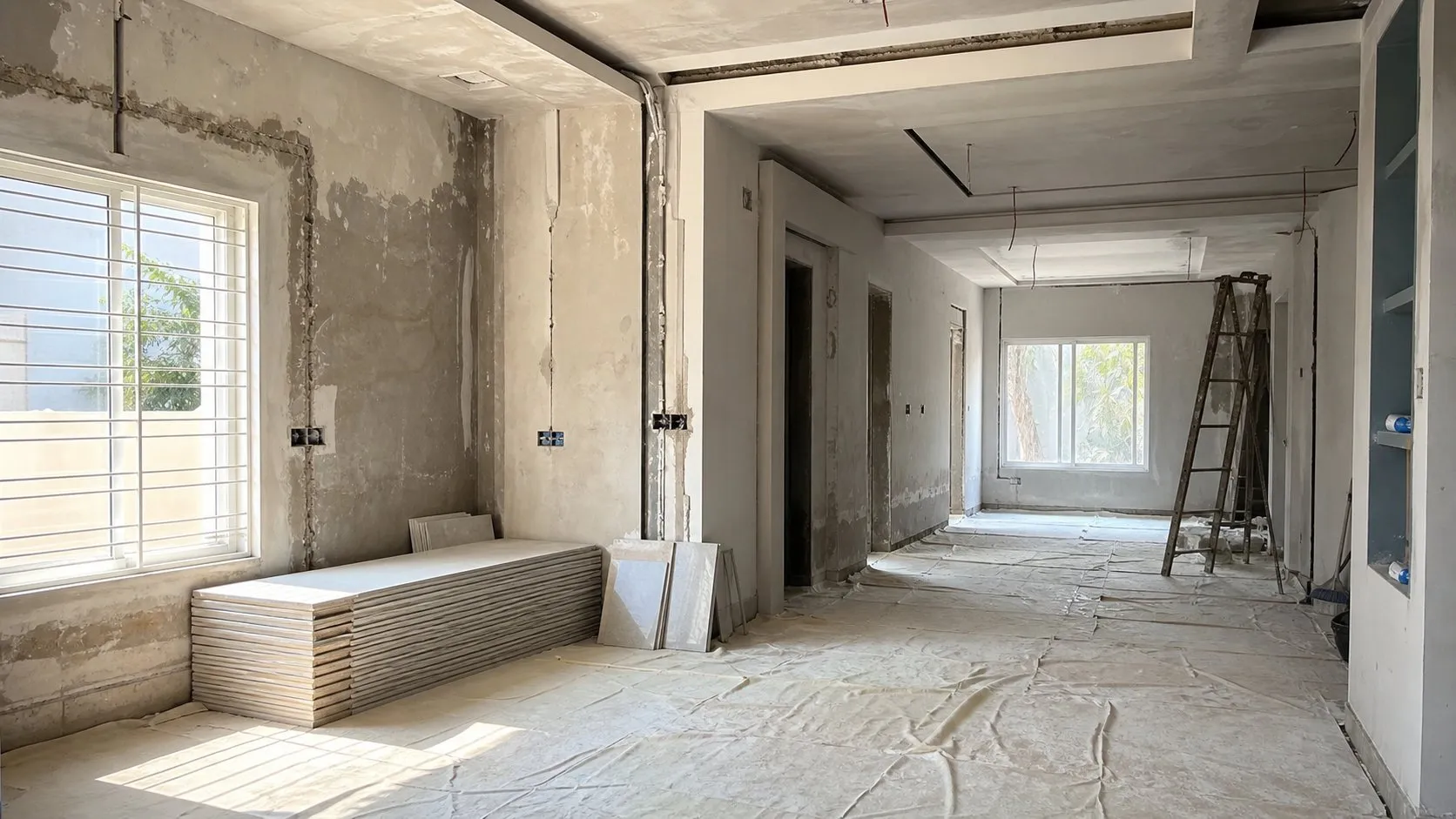
What causes delays in Lahore
- Design changes after work starts.
- Late decisions on tiles, fittings or colours.
- Imported materials with long delivery.
- Hidden problems in old wiring or pipes.
- Monsoon humidity slowing plaster and paint.
- Living in the house during works.
- Society restrictions on working hours.
How to keep the schedule
- Finish design and selections before demolition.
- Order long-lead items early.
- Freeze the scope and price changes formally.
- Run joinery production in the workshop while site work continues.
- Hold a short weekly site meeting.
Our home renovation checklist walks through each step.
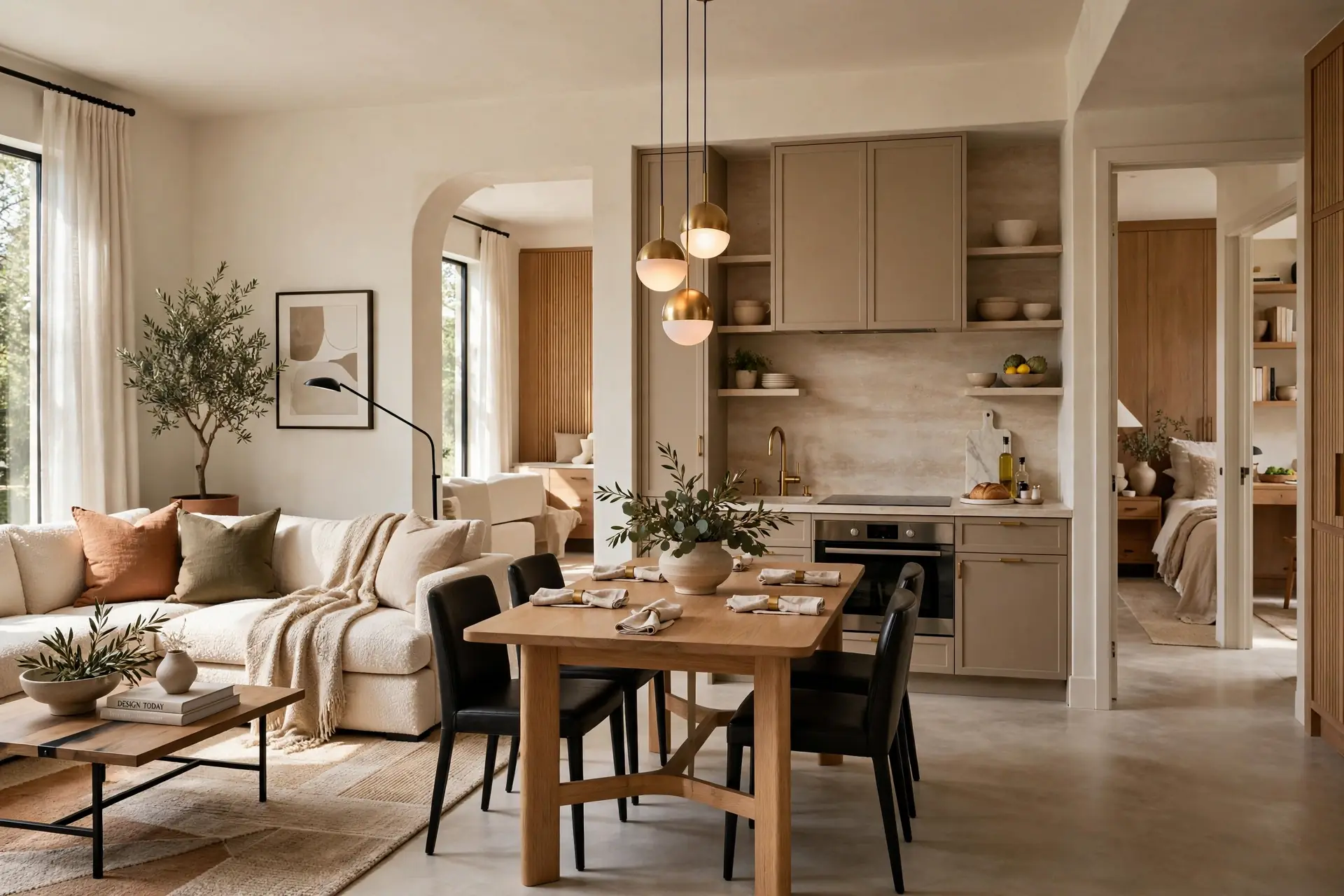
What causes delays
- Late decisions on tiles, fittings and finishes.
- Hidden damage found after demolition.
- Long-lead imported items ordered late.
- Changes to the design once work has started.
- Weather, especially monsoon rain for external work.
Decide early, order early and keep changes to a minimum.
Living in the house during renovation
If you stay at home, plan which rooms will be out of use and when. Keep one bathroom and a basic kitchen working, and seal off work areas with dust sheets. Moving out for the noisiest phases, usually demolition and tiling, makes life much easier.
A simple weekly routine
- One short site meeting each week at a fixed time.
- A written list of decisions needed in the next two weeks.
- Photos of progress shared after each meeting.
- Any change recorded in writing with its effect on cost and time.
This routine keeps everyone aligned and prevents surprises at handover.
Next steps
If you are planning a house renovation, start by writing down what you want to change, what must stay and the date you need the space ready. Take photos of the space as it is today and collect a few images of interiors you like.
Decide whether you will live in the house during the work. This affects phasing, dust protection and which rooms are done first.
When you are ready, see our house renovation page or book a site visit or studio meeting. A designer can review your space, talk through options and prepare a written, itemised quote.
Planning your renovation
The fastest renovations are the best prepared ones. Spend time on design and decisions, and the site phase runs smoothly. See our house renovation service, the renovation cost guide, or book a site visit for a schedule based on your house.
The short version.
- Phases set the schedule: design, services, civil, finishes, handover.
- Decisions cause most delays: choose finishes before demolition.
- Workshop joinery in parallel saves site time.
Questions
Asked often, answered plainly.
It depends on the scope and how quickly decisions are made. Once the scope is fixed, a phase-by-phase plan gives a reliable schedule.
Design changes and late material decisions, followed by hidden problems found during demolition.
Yes, with phasing, but it takes longer and needs careful dust and safety control.
High humidity slows plaster and paint drying, so plan wet trades around it where possible.
The fastest renovation is the one that finished deciding before it started building.
Keep looking
Related reading.
House Renovation Cost in Lahore 2026: What Drives the Per-Sq-Ft Rate
Scope tiers, per-sq-ft drivers and the extras that surprise owners, explained before you call a contractor.
Read the article
A calm home renovation checklist
A calm home renovation checklist: survey first, freeze scope, hold a budget buffer, sequence the trades, and p
Read the article5 Marla House Renovation Cost in Lahore 2026
A compact home renovation, item by item, with ways to win space without moving walls.
Read the article