
Materials
Flooring Options in Pakistan: Porcelain, Marble, Wood and Vinyl
Floors take the most wear in any home. In Pakistan's heat, dust and monsoon damp, the right material matters more than the trend.
The four main choices
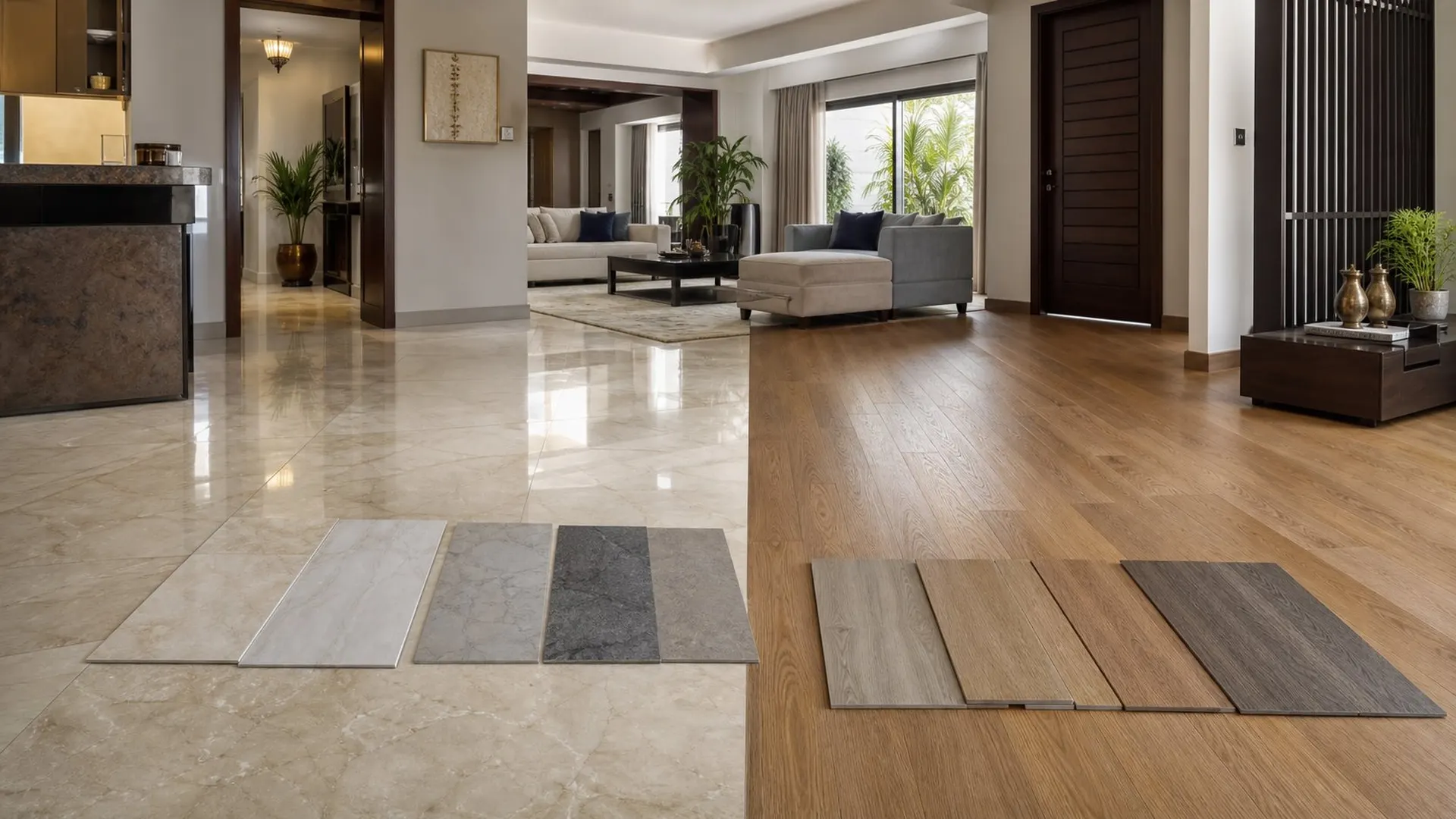
The common flooring options in Pakistan are porcelain tile, natural marble, wood (solid or engineered) and vinyl. Each has a place.
| Material | Strengths | Weak points | Best rooms |
|---|---|---|---|
| Porcelain | Hard, low-maintenance, many looks | Cold, grout lines | Everywhere, especially kitchens and baths |
| Marble | Natural, cool, timeless | Stains, etches, needs polishing | Drawing rooms, lounges, stairs |
| Engineered wood | Warm, quiet underfoot | Damp and scratches | Bedrooms, studies |
| Vinyl (SPC/LVT) | Fast to fit, water-resistant, soft | Can dent, lower prestige | Rentals, offices, upper floors |
What drives the cost
- Material grade and origin: local versus imported.
- Tile or slab size: large formats need flatter bases and skilled fixing.
- Base preparation: levelling old floors adds work.
- Wastage on patterns and cuts.
- Finishing: polishing marble, skirting, thresholds.
Ask for an itemised quote that separates material, preparation and labour so options can be compared fairly.
Climate matters
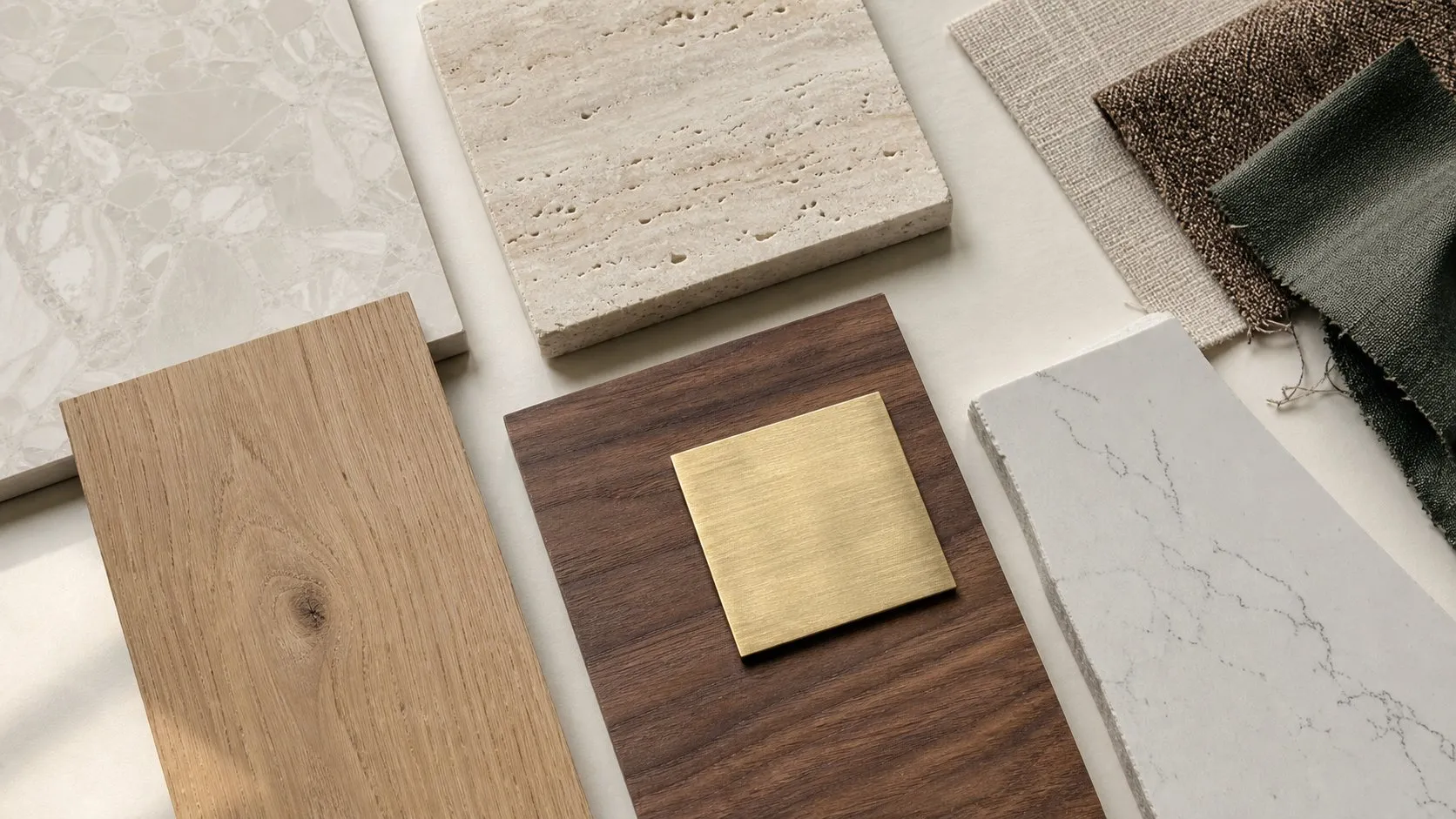
Summer heat, dust storms and monsoon humidity are hard on floors. Porcelain and marble stay cool and handle dust well. Wood needs stable humidity and should avoid ground floors with damp risk. Vinyl copes with water but can soften near very hot, sunny windows. More in materials that survive Lahore's climate.
Matching floor to room
Use one main floor through connected living spaces, then change material at clear thresholds such as bedroom doors. Choose slip-resistant finishes in kitchens, baths and outdoor areas, and softer, warmer floors where people walk barefoot.
Installation quality matters as much as material
A good tile badly laid looks worse than an average tile laid well. Ask about base levelling, tile spacing, grout type, and whether large tiles will be back-buttered to avoid hollow spots. For marble, ask how and when it will be polished and sealed. For wood and vinyl, check the underlay and the acclimatisation period.
Maintenance by material
| Material | Daily care | Long-term care |
|---|---|---|
| Porcelain | Sweep and mop | Clean grout occasionally |
| Marble | Neutral cleaner, wipe spills fast | Periodic polishing and sealing |
| Engineered wood | Dry mop, avoid standing water | Refinish surface when worn |
| Vinyl | Sweep and damp mop | Replace damaged planks |
Choose a floor whose care you will actually keep up with.
Skirting, thresholds and transitions
Details make floors look finished. Plan matching or contrasting skirting, neat thresholds where materials change, and level transitions so there is no trip edge. In open-plan homes, avoid changing material in the middle of a room.
Questions to ask your supplier
- Is the tile rated for floor use and the right slip resistance?
- Are all boxes from the same batch?
- What spare quantity should I keep?
- What adhesive and grout do you recommend?
How to prepare for your first design meeting
A clear brief saves time and leads to better design. Before you meet a designer, gather a few simple things.
- Plans or drawings of the space, or a rough sketch with measurements.
- Photos of the space as it is today.
- Five to ten images of interiors you like, and a few you dislike.
- A list of must-haves and nice-to-haves.
- A realistic budget range and the date you need the space ready.
With this in hand, the first meeting moves straight to ideas instead of basic questions. You can book a site visit or studio meeting online.
Before you choose
- List each room and how it is used.
- Check the base: level, damp, height limits at doors.
- View large samples at home in daylight.
- Compare itemised quotes.
- Plan furniture and skirting with the floor.
Changing floors is part of most renovation projects.
The short version.
- Porcelain is the most practical all-rounder.
- Marble gives prestige but needs care.
- Wood suits dry bedrooms; vinyl suits fast refits.
Questions
Asked often, answered plainly.
Porcelain tile is the most practical all-round choice for heat, dust and cleaning. Marble suits formal rooms.
Engineered wood works in bedrooms and upper floors with stable humidity. Avoid damp ground floors.
Marble is natural and prestigious but stains and needs polishing. Porcelain is harder and easier to maintain.
Sometimes, if the old floor is level and sound and door heights allow. A site check confirms it.
Choose the floor for the life it will live, not the showroom it came from.
Keep looking
Related reading.
Materials That Survive Lahore's Climate
Flooring, joinery, paint and fabrics that cope with heat, dust and monsoon humidity.
Read the article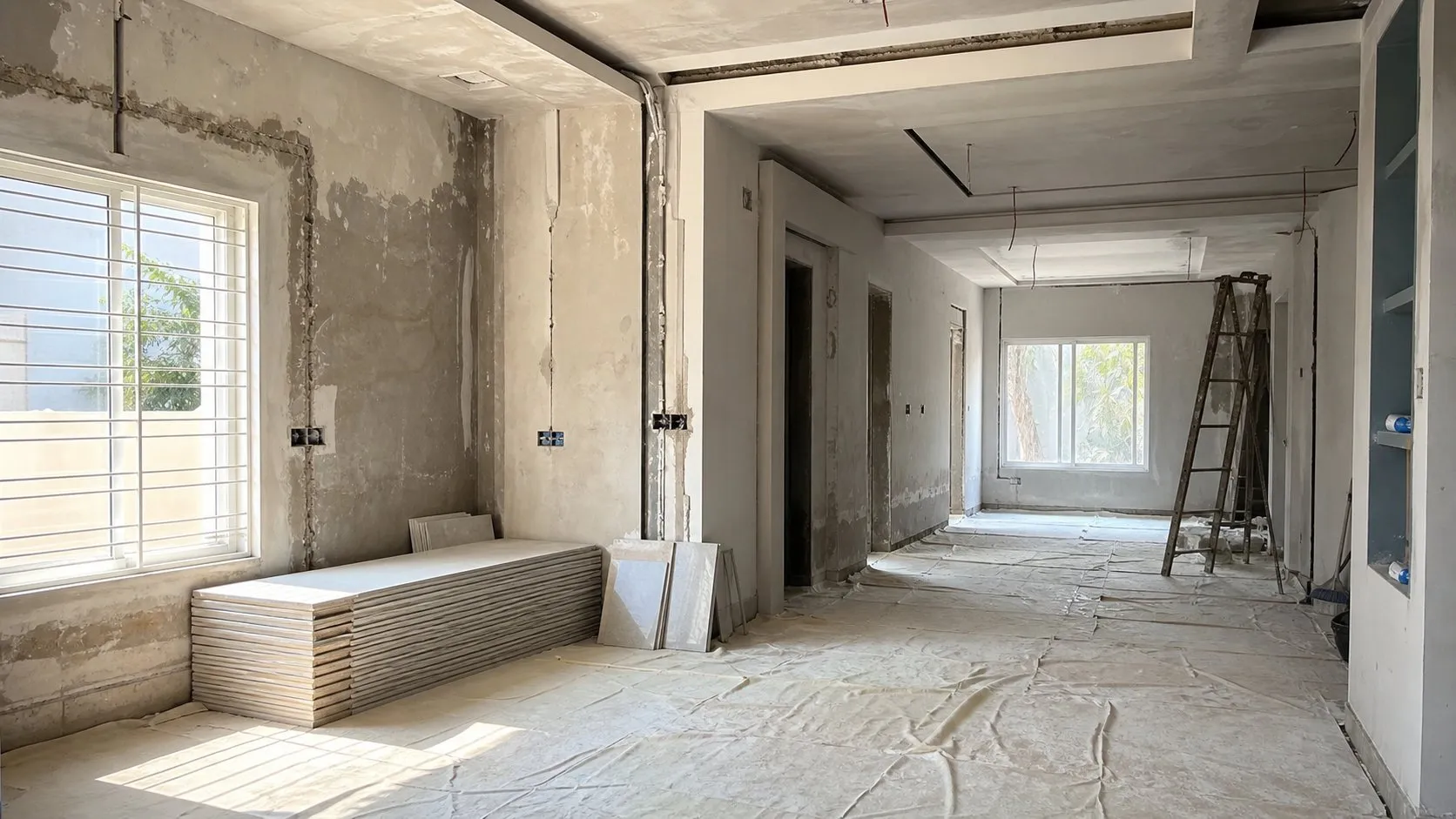
House Renovation Cost in Lahore 2026: What Drives the Per-Sq-Ft Rate
Scope tiers, per-sq-ft drivers and the extras that surprise owners, explained before you call a contractor.
Read the article
5 Marla House Renovation Cost in Lahore 2026
A compact home renovation, item by item, with ways to win space without moving walls.
Read the article